
What canthal tilt is
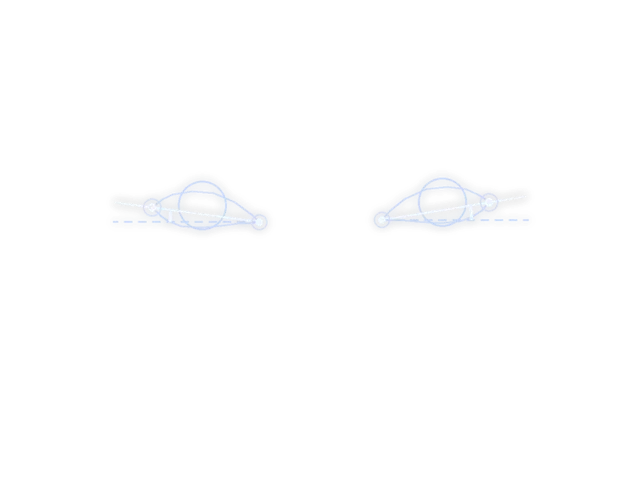
Canthal tilt is the angle of the line from the inner corner of your eye to the outer corner. Each corner is a canthus (plural canthi). The medial canthus is the inner corner next to your nose, and the lateral canthus is the outer corner toward your temple. In facial measurement, the two points are called the endocanthion and the exocanthion. The opening between your eyelids is the palpebral fissure, so doctors often call the same angle the palpebral fissure inclination or slant.
The corners are held in place by tendons. The lateral canthal tendon attaches to a small bump on the bony rim of the eye socket (Whitnall's tubercle), and the medial canthal tendon anchors the inner corner near the nose (EyeWiki, American Academy of Ophthalmology). Because the corners are tied to bone, your tilt comes mostly from your anatomy, not from habits.
The NIH Elements of Morphology standard measures the slant against the line through both inner corners, with the facial midline vertical and the head neither raised nor lowered. It also notes that the average inclination is slightly upslanting at all ages. Our test levels the face to its midline in the same way.
Positive, neutral and negative tilt
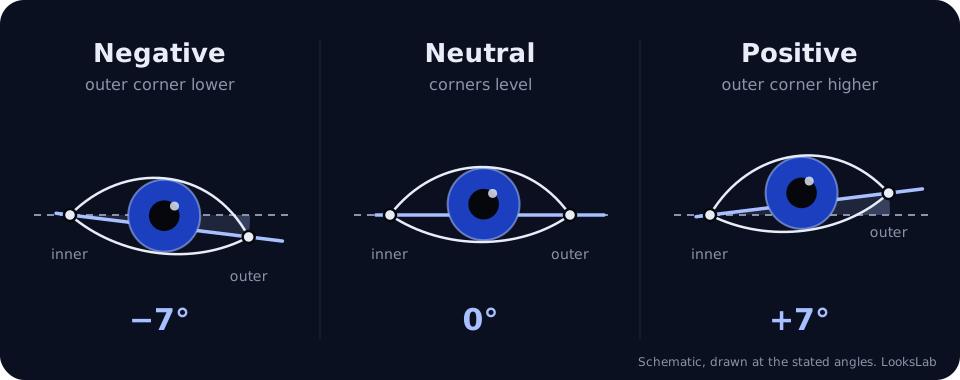
- Positive tilt: the outer corner sits higher than the inner corner. This is the usual direction in adults.
- Neutral tilt: the two corners sit about level.
- Negative tilt: the outer corner sits lower than the inner corner, so the eye looks slightly downturned.
The sign is the only published definition. Studies do not agree on a "neutral" range, so we set one from how precisely a photo can measure the angle: from −2° to +2°, camera height and landmark error can move a reading across zero, so we show it as neutral. Clinical genetics uses a stricter bar: a slant counts as downslanted only when it is more than two standard deviations below the mean for age (Elements of Morphology). A mildly negative tilt is not a medical finding.
What real measurements look like
Canthal tilt differs by ancestry and sex, and the method changes the number too: the same group can measure a few degrees apart in two studies. Compare directions and gaps, not decimals.
| Group and study | Men | Women | Method |
|---|---|---|---|
| Caucasian adults, 18–30 (Gao et al., 2025) | +0.8° (SD 2.8) | +2.4° (SD 2.6) | 3D photos, against the line through both inner corners |
| Chinese adults, 18–30 (Gao et al., 2025) | +4.9° (SD 3.0) | +6.0° (SD 2.9) | Same as above |
| South Indian adults, 18–26 (Vasanthakumar et al., 2013) | +5.1° | +6.1° | Standardized front photos |
| Korean adults (Park et al., 2008) | +7.9° (SD 2.4) | +8.8° (SD 2.3) | Clinic sample, adult values |
| White, Japanese and Indigenous Brazilians (Hanada et al., 2001) | +4.6°, +9.4°, +9.6° | (sexes pooled) | Front photos |
| Non-Latino white, Latino and East Asian adults (Fry et al., 2017) | +2.5°, +6.0°, +8.0° | (sexes pooled) | Photos, head in a standard position |
Gao et al. report the angle as a value near 180°; we show it as the difference from 180°. Three patterns hold across these studies:
- Every group average is positive. Negative readings are less common, but with a spread of 2 to 3 degrees, many people in the groups with lower averages measure near or below zero.
- Women tend to measure higher than men in the studies that split by sex.
- East Asian samples measure higher than white samples in every comparison above.
Age. In a review of 296 patient photos, the median outer-corner angle was 2.3° in Caucasian patients aged 45 or younger and 1.3° in those over 45. In African American patients it fell from 3.0° to 1.15° (Odunze et al., 2008). In photos of 3,600 women of six ethnicities, the eye axis became less upturned with age in every group, possibly because the outer corner sags (Flament et al., 2020).
How this canthal tilt test measures you
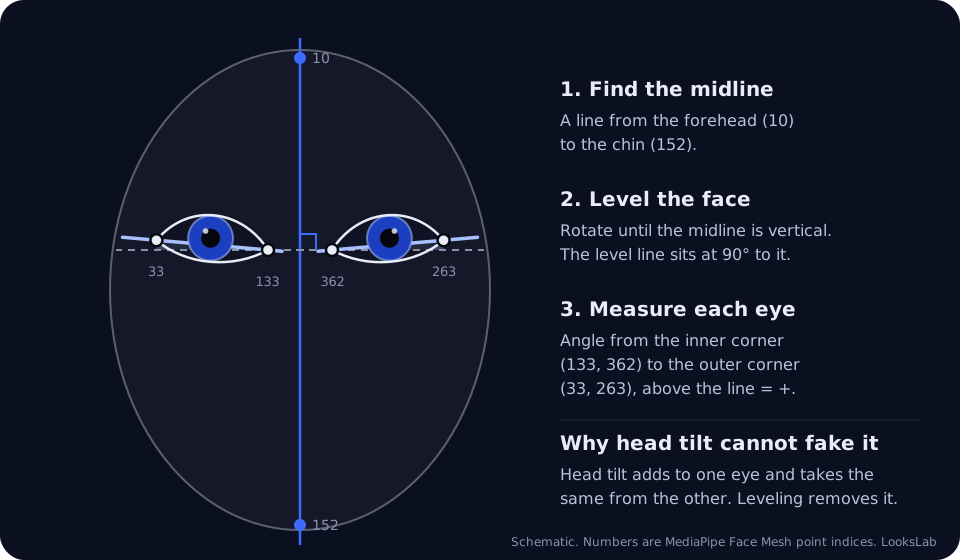
- Landmarks. Google's MediaPipe Face Landmarker places 478 points on your face. The test uses four: 133 and 33 for your right eye, 362 and 263 for your left.
- Leveling. We draw your facial midline from the forehead (point 10) to the chin (point 152) and rotate the image until it is vertical. The level line is at 90° to that midline, not to the edge of the photo.
- Per eye. We measure the angle from each inner corner to its outer corner against the level line. Above the line is positive.
- Average. Your headline number is the average of both eyes. Head tilt adds a few degrees to one eye and takes the same amount from the other, so it cannot change the average. Leveling also removes it from each eye.
- Height in millimeters. We also estimate how far the outer corner sits above or below the inner corner, from an average 63 mm distance between the pupils. For a typical eye, 2 mm is about 4°.
Your photo is processed in your browser and never uploaded. The two-eye average is the same number that the LooksLab app's face scan reports as canthal tilt.
The corner points are model estimates, not the points a clinician would mark. They follow the edge of the visible eye opening, and the inner corner is a rounded area around the pink caruncle, so the point can sit slightly off the true endocanthion. On a 30 mm wide eye, moving one corner 0.5 mm up or down changes the angle by about 1°. We have not validated these readings against clinical measurements. Your result shows close-ups of both eyes, so you can check that the dots sit on the corners.
What your result means
Your result is an app estimate from one photo. It is not a medical finding, and it is not a measure of your worth. Above +2° is positive, the usual direction. From −2° to +2° is neutral: take two or three photos before you decide which side of zero you are on. Below −2° is negative: less common in published averages, but a normal variation.
The left–right difference is shown separately. Up to about 2° is within the error of one photo. A larger difference is worth a second photo taken straight on before you read anything into it. For a wider look at left–right balance, try the face symmetry test.
Your plan focus. The result picks one area from your own readings, not a fixed one. If a straight-on photo shows your eyes differing by more than photo error, the focus is eye symmetry, with the measured gap in the title. If your average is negative, the focus is your outer eye corners. If it is neutral, the focus is eye shape. In both cases the plan works on what surrounds the corners, such as brows, liner and the under-eye area, because no routine moves the corners themselves. If your tilt is positive, the result says so and names the least even reading: a small left–right gap if there is one, otherwise the under-eye area. A higher tilt is never flagged as a weakness.
What causes a negative canthal tilt
Most negative tilts are simply how a face is built: the tendon attachments and the shape of the eye socket and cheekbones set where the outer corner sits. Elements of Morphology notes that underdeveloped cheekbones and widely spaced eyes can go with a downward slant.
Other causes build up over time or follow an event:
- Age. The outer corner tends to drop slowly, as shown above. EyeWiki lists age-related laxity among the causes of eye-corner changes.
- Lower eyelid laxity. EyeWiki names a loose lower lid as a reason for canthal surgery, with earlier surgery, aging, hormonal conditions, congenital causes, trauma and paralysis as typical causes.
- Surgery or injury. EyeWiki lists earlier surgery, fractures, canthal trauma and scarring among the causes of a changed eye corner. Lower-lid retraction after eyelid surgery (blepharoplasty) is one reason for canthoplasty.
See an eye doctor if the lid position changes quickly or on one side only, the lower lid pulls away from the eye, or your eyes water or feel irritated.
Does canthal tilt affect attractiveness?
The evidence is small and mixed:
- In a forced-choice experiment, raters preferred female faces with a "medial canthal tilt" accentuated in Photoshop over the unedited faces 93% of the time. The authors linked the effect to the slant of the eye opening (Bashour and Geist, 2007).
- Italian beauty-contest participants had steeper eye-opening slants than other young adults, in both sexes (Sforza et al., 2015).
- Photos of 42 Caucasian celebrities measured +8.5° in women and +6.5° in men, above the 4.1° general figure the authors cite (Liu et al., 2023). But posing matters: in a study of 12 women, lowering the chin made the tilt look more positive and raised periorbital ratings (Vaca et al., 2022).
- In a 2025 study, 2,081 people rated an edited face. Raising the outer eye corner lowered ratings of attractiveness, femininity and trustworthiness, and raised ratings of dominance and threat (Kempa et al., 2025).
- A review of facial aesthetic ideals found only six studies on the eye region, with a mean evidence level of 3 on a scale where 1 is strongest (Faderani et al., 2024).
Preferences also differ by culture. EyeWiki notes that cosmetic canthoplasty in East Asian patients often tilts the outer corner down to make the eyes look larger. In Western practice, the same operation usually raises it to reverse aging.
In short, a mildly positive tilt is the average direction, and some studies link a steeper slant with higher ratings. We found no study that sets an angle below which a face becomes unattractive. Your whole face counts for much more: see how the measured factors combine in the attractiveness test or the PSL scale test.
Can you change your canthal tilt?
What does not move the corners. The canthal tendons are anchored to bone. We found no evidence that facial exercises, massage, tape or creams permanently change where they attach.
What changes how the eye area reads:
- Brows. Brow shape and grooming change the frame around the eye and the visual line toward the temple. They do not move the canthus.
- Makeup. An eyeliner wing angled up from the outer third, or lashes focused at the outer corner, creates an upward visual line without changing anything structural.
- Sleep and the under-eye area. In one experiment, the same people looked like they had more hanging eyelids, more swollen eyes and darker circles after a night of sleep deprivation (Sundelin et al., 2013). These cues change how tired the eye area looks, whatever your tilt.
- Photos. Camera height and chin angle change the tilt a camera records, as the next section shows.
Medical options. Canthoplasty reshapes the eye corner, and surgeons can combine it with a canthopexy when the lid is loose. Both are real operations with risks, including an outward-turning lower lid (ectropion), eyelashes rubbing the eye (trichiasis), swelling of the eye surface (chemosis) and corneal damage (EyeWiki). Whether either is suitable needs an in-person assessment by a qualified oculoplastic surgeon. A number from a photo is not a reason to have surgery.
Limits of measuring from a photo
- Camera height and chin angle. This is the biggest source of error. In Vaca et al., the outer corner sat 2.6 mm above the inner corner with the head level. It sat 4.4 mm above with the chin 15° down and 0.1 mm above with the chin 15° up. On a 30 mm eye, that is roughly +5°, +8° and 0° (our conversion). A camera above eye level has a similar effect to a lowered chin.
- Head turn. Turning your head changes both angles. The test refuses strongly turned photos and adds a note for slightly turned ones.
- Expression. Smiling and squinting change the shape of the eye opening. Keep your face relaxed and your eyes open normally.
- Resolution. If your eyes are small in the photo, each pixel counts for more. At 30 px wide, a 1 px error is almost 2°. Your result shows this number for your photo.
How to take a photo for an accurate reading
- Hold the camera at eye level, about an arm's length away or farther.
- Look straight into the lens with your chin level. Both ears should be about equally visible.
- Use soft, even light from the front. Avoid a strong light from one side.
- Keep a neutral face with your eyes open normally. Glasses off, and hair away from the eye corners.
- Take two or three photos and compare them.
Our guide to taking photos for face analysis covers camera distance and lighting in more detail.
Related face tools
The same photo works for the face symmetry test, which compares your left and right sides, the golden ratio face calculator and the face shape detector.
Frequently asked questions
What is canthal tilt?
Canthal tilt is the angle of the line from the inner corner of the eye to the outer corner, measured against a level line across the face. Doctors call it the palpebral fissure inclination. If the outer corner sits higher, the tilt is positive. If it sits lower, the tilt is negative. It describes the shape of the eye opening. It is not a diagnosis and not a score.
What is a negative canthal tilt?
A negative canthal tilt means the outer corner of the eye sits lower than the inner corner, so the line between them slopes down toward the temple. It is a description of eye shape, not a diagnosis, and it is less common than a positive tilt in published adult averages. On this test, an average below −2° is shown as negative.
What is a positive canthal tilt?
A positive canthal tilt means the outer corner of the eye sits higher than the inner corner, so the eye line slopes up toward the temple. It is the usual direction in adults: every published group average we found is positive, from about +1° to +9°. A positive reading describes direction only. It does not rate the rest of the eye area.
What is a neutral canthal tilt?
A neutral canthal tilt means the inner and outer corners sit at about the same height. Studies do not agree on a neutral range, so this test sets one from photo precision: an average between −2° and +2° is shown as neutral, because camera height and landmark error can move a reading that much. Take two or three photos before you decide which side of zero you are on.
Is a positive canthal tilt better than a negative one?
Not in any simple way. Some studies link a steeper upward slant with higher ratings, and Italian beauty-contest participants had steeper slants than other young adults. But a 2025 study of 2,081 raters found that raising the outer corner of an edited face lowered attractiveness and trustworthiness ratings. A positive tilt is the more common direction, not a better one, and the whole face counts for far more than one angle.
Is a negative canthal tilt bad or unattractive?
No. It is a normal variation of eye shape, and a mildly negative reading is not a medical finding: clinical genetics only calls a slant downslanted when it is more than two standard deviations below the average for age. We found no study that sets an angle below which a face becomes unattractive, and cosmetic surgeons in East Asia often lower the outer corner on purpose.
How do I know if I have a negative canthal tilt?
Take a front photo with the camera at eye level and a relaxed face, then use the test above. It measures the angle from the inner to the outer corner of each eye. An average below −2° is shown as negative. Between −2° and +2° is shown as neutral, because photo error alone can move a reading that much.
How do you measure canthal tilt?
Mark the inner and outer corner of each eye, draw a line between them and measure its angle against a level line. The level line must follow the face, not the edge of the photo, or head tilt adds error to each eye. This test uses Google's MediaPipe landmarks, levels the face to its midline, measures each eye and averages both. You can also draw the lines by hand on an eye-level photo.
What is a normal or ideal canthal tilt?
There is no single normal or ideal value. Published adult averages are positive in every group studied, from about +1° in young Caucasian men to about +9° in Korean and Japanese samples, and the spread within each group is about 2 to 3 degrees either way. We found no study that sets an ideal angle. A sample of 42 Caucasian celebrities measured about +8.5° in women and +6.5° in men.
What causes a negative canthal tilt?
Mostly anatomy. Tendons tie the eye corners to the bone of the eye socket, so the shape of the socket and cheekbones sets where the outer corner sits. Underdeveloped cheekbones and widely spaced eyes can go with a downward slant. Over time, age, a loose lower lid, earlier eyelid surgery or an injury can lower the outer corner. A new change on one side is a reason to see an eye doctor.
Can you fix a negative canthal tilt without surgery?
No. Tendons anchor the eye corners to the bone of the eye socket, and we found no evidence that exercises, massage, tape or creams move them. You can change how the eye area reads: brow shaping and eyeliner change the visual line, and enough sleep reduces the swollen, dark-circled look. A negative tilt also does not need fixing.
Can you get a positive canthal tilt naturally?
Not structurally, because no natural method moves the canthal tendons. What you can change is the look: brows groomed to lift toward the tail, liner angled up from the outer third, and a rested under-eye area. Photos matter too. In one study, lowering the chin 15° made the outer corner sit almost 2 mm higher than with the head level, which reads as a steeper tilt.
What surgery changes canthal tilt?
Canthoplasty reshapes the outer eye corner, and surgeons can combine it with a canthopexy when the lower lid is loose. Both are real operations with risks such as an outward-turning lower lid, eyelashes rubbing the eye, swelling of the eye surface and corneal damage. Whether either suits you needs an in-person assessment by an oculoplastic surgeon. A number from a photo is not a reason for surgery.
What eyeliner works for a negative canthal tilt?
A wing angled up from the outer third of the upper lid, toward the tail of the brow, creates an upward line instead of following the eye's downward slope. Mascara or lashes focused on the outer corners support the same effect. Makeup changes the visual line without changing anything structural, and it is optional: a downturned eye is a normal shape.
Does canthal tilt change with age?
It usually drops a little. In one study of 296 patient photos, the median angle was about 1° to 2° lower in patients over 45 than in younger patients. A study of photos of 3,600 women found the eye axis became less upturned with age in all six ethnic groups, possibly because the outer corner sags.
Why is my canthal tilt different in each eye?
Small differences are common, and part of any difference is photo error: a slightly turned head, a squint or a small photo changes one eye more than the other. Up to about 2° is within the error of one photo. If a straight-on photo shows a larger gap, your result makes eye symmetry the plan focus and asks you to retake the photo to confirm it.
Is this canthal tilt test accurate?
It removes head tilt exactly, but not camera height, chin angle or small landmark errors. The corner points are model estimates that we have not validated against clinical measurements. Treat a single reading as plus or minus one to two degrees, and compare two or three photos taken the same way.
Do men, women and ethnic groups have different canthal tilts?
Yes, on average. Women measure a little higher than men in most studies that split by sex, for example +2.4° against +0.8° in young Caucasian adults. East Asian samples measure higher than white samples in every comparison we found, with Korean and Japanese averages near +8° to +9°. The spread within each group is wide, so a group average cannot judge one person's reading.